

Artist paints vivid picture of tragic rural threesome
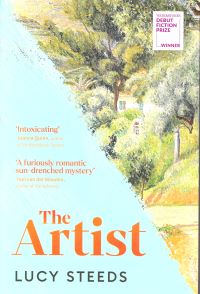 How many more book awards can there be? What was once a mere handful has blown out to become a deluge, covering all markets and an endless number of sub-genres. Prominent among them in recent times has been the beautifully crafted story of The Artist.
Even with several months yet to come, I bravely declared The Artist as my book of the year. Nothing would surpass it.
And so far, nothing has.
Lucy Steeds‘ seamlessly woven novel has already been dubbed a Sunday Times bestseller and was chosen as Waterstones 2025 Book of the Year after winning last year’s Waterstones Debut Fiction Prize. It was also longlisted for the Women’s Prize for Fiction.
Several other awards and nominations have followed and more seem certain to continue.
Regardless of these much-deserved prizes The Artist has achieved the even better accolade of being read and widely recommended. Enjoyed by the many rather than the few, which is often the sad fate of award winners.
Its undoubted appeal is to lovers of literature across a wide range of genres. It ticks so many boxes..
At its heart, it is a love story. An often brittle entanglement that enmeshes the book’s three main characters. A story that simmers; a slow burn of hints and unfulfilled desires set in sun-blessed Provence in the post-war 1920s.
It was a period of recovery and renewal for thousands still shocked by what the world had so recenty endured.
The Artist is no ordinary love story. Not merely a tale of thwarted and burning passion between three people. But a love of words, of language, of food, of colour and painting and of so much else that is sensuous and which has the power to captivate the heart and soul.
And bring tragedy in its wake.
There is mystery, suspicion, deception.
The bright clarity of the Provence countryside sits uneasily alongside the threatening darkness in which much of the story unfolds. Secrets hidden and revealed mostly only by torchlight.
The peg upon which it hangs is a woman’s 1957 visit to the National Gallery in London. She is there to view only one painting. She stands in front of it, transfixed, motionless as it arouses distant memories; distant in time and place.
What follows this teasing intro is a flashback with the focus of each chapter switching between the artist of the title, his niece Ettie, who cleans, cooks and is permanently at his beck and call, and an earnest young journalist from London on assignment to interview the reclusive, temperamental and demanding painter.
The trio inhabit a claustrophobic, close and cloying world where everything revolves around the famous but little known or seen Edouard Tartuffe, the artist.
From 1950s London we are transported to a sleepy village in Provence in 1920.
A young Englishman, barely out of his teens, has arrived after an arduous and less-than-budget class journey from London. Trains, a cross-Channel steamer, more trains and eventually hitching a ride on a milk cart have brought him, dusty, sweaty and blinded by the hot Mediterranean sun, to Saint-Auguste.
Ahead of him there is still another deserted road to follow, then a donkey track, ruined buildings, and a twisting riverside path before reaching the old farmhouse that is his destination.
Joseph Adelaide has arrived as the result of a letter consisting of a single word, venez – come.
Nothing more is needed. The writing matches that of the signatures he has seen on numerous paintings hanging in galleries and showrooms.
It is that of Edouard Tartuffe, the renowned painter known as the Master; the man who Joseph finds lazing in an old wicker chair on the farmhouse terrace. A recluse who few have met or spoken to.
It is Joseph’s blind ambition to be a journalist that has led him to go where all others have failed. Track down, interview and reveal Tartuffe to the wider world and his career will be assured.
Although we are only a mere few pages into the story Steeds’ beautifully descriptive prose has already drawn us into a beguiling world where every aspect – and every person – has been minutely etched. We have a sense of place, of mannerisms, tense relationships, dreams and inhibitions. We can feel his every step along that dusty path.
Such finely tuned writing. Not a word wasted. Every syllable and phrase pulling its weight.
Peeling back the veneer to reveal the taut and tense world that lies beneath.
Joseph reluctantly agrees to pose as Tartuffe’s model in return for bed and board. He ignores Ettie’s concern at this arrangement and responds with his own displeasure at her acceptance of Tartuffe’s bullying that reduces her to little more than a skivvy.
But she is a skivvy with a questioning mind, an artistic talent of her own, and an open senuality that helps her bend mens’ minds to her wishes and desires.
She crafts colourful meals to meet Tartuffe’s demands that he can paint as well as devour the dishes she prepares. All of which are described in Steeds’ free-flowing and seductive writing. We dine upon these feasts of Provence fare in company with this mismatched trio.
There are tantrums and anger, days of brooding silence, and of unbridled joy. It carries us along at a cracking pace fearful of where it might all end and yet perversely envious of the inhabitants of this cloistered world thanks to the sheer beauty of the weaving of words.
.Steeds has attributed this to her synesthesia, a neurological trait that occurs when the stimulation of one sense triggers an automatic, involuntary experience in another.
She has said in her case it primarily results in highly visual language and shapes her creative world. She uses it to translate complex visual and sensory details into her writing.
And it shows. Making The Artist such a rich, enjoyable pleasure and a sheer delight.
It remains my book of the year.